Tuesday, October 9, 2012

Our next project is a wheel project!  We will start getting people on the wheels this week, but it may take you a few tries to create a project you can save, so this project will not be due until the end of next week or so.

In preparation for this project, I want you to look at images of wheel-made objects.  You will be creating a bowl form, but you can bring in any wheel-made image that inspires you.  Please cut it out of a magazine or print it out--hard copies only! (it doesn't need to be in color).

This image is due Friday, October 12th (or early for extra credit!)

Tuesday, September 18, 2012

For homework this week, you need to collect 3 items that can be used to create textures.

Some ideas include:
tree bark or leaves                 old jewelry
sandpaper                              shells
wire or mesh screen              rope, yarn or string
old small plastic toys (army man, matchbox car, etc.)

...or anything else you can find that might make an interesting print on clay!

We will be using these on our next project, so bring them in on time (or early for extra credit!)

Due Friday September 21st

Monday, September 10, 2012


Creating a Clay Stamp

For this project, you will create both an initials stamp and a symbol stamp.  They can be combined onto the same form, or you may create two separate forms for your stamps.


Think about both the form and the designs you are creating:


*There is a direct and inverse relationship between the stamp you create and the impression it makes on the clay.

*The design you create is a representation of how you wish to be perceived.

Steps for creating your stamps:

1.  After completing your sketches, recycle and wedge
a piece of clay about the size of an apple.

2.  Break off a piece of this clay and begin shaping your stamp handle.  Remember that the handles can be circular, square, triangular—whatever you like, but they must not be thicker than 1”!  Leave the ends wider for the images to be put onto.

3.  Trace your designs onto small pieces of tracing paper with a pencil.  Then put the tracing
paper pencil side down onto the flattened end.  The design should appear backwards at this point--which is especially important for your letters!!  Trace over the design with your pencil or a pin tool
and check to make sure the graphite has transferred onto the clay.

4.  Use a pin tool to cut off the clay around your design to make the letters or picture pop up off the block…or use a carving tool to scoop out the clay inside your letters or picture to make them
indent into the block.

5.  Smooth out the entire stamp: this is best done when most of the carving is complete, and the stamp
is leather hard.  Scrape out any excess crumbs of clay, use small amounts of water to smooth the handle
and surfaces of your stamp.

6.  When both stamps have been carved, put your name and block on the handle of the stamp (legibly), check it with your teacher,  and put the stamp on the Greenware shelf to be fired!

Thursday, August 30, 2012


Miss Patterson
Beginning Ceramics
Clay is an ancient medium that began as a means to create functional objects used in everyday life, and has evolved to become one of the most beautiful forms of artistic expression. In this class, you will have the opportunity to explore your creativity through the form and function of ceramics. I encourage you to take risks and develop your personal style throughout the semester.
In this class, we will study the beginning techniques of pinching, coiling and slab building. We will also practice beginning skills on the wheel. In addition to the class work, you will have weekly assignments reinforcing the techniques we are studying.
For this class you will need:
shoebox to store clay and projects in (I have some used ones, or you can get your own)
notebook to record outside assignments and sketch project ideas (lined, blank, leftover from Foundations…)
three plastic bags to wrap clay in--small trash bags and gallon-sized Ziploc bags work well
soap, hand lotion or tissues to contribute to the classroom
These items are due next class!
Grading
Your projects will be graded by the execution of the technique studied, the glaze or finish, and your written feedback on the grading sheet. You are responsible for any assignments written on the board, so check it daily!Your overall grade will be a combination of your projects, outside assignments, and effort.
Cleanup
Keeping this room clean is a matter of safety. Each artist is responsible for their own workspace as well as a weekly studio job, which will help with the general maintenance of the studio space. Completion of your cleanup jobs will factor into your effort grade.
Expectations
*You will show up on time and remain in class until the bell rings. If you need to leave, tell me. Lining up at the door before the bell shows me that you have extra time to do more cleaning!
*You will work on projects throughout the class, and clean up well every day. Your effort grade is heavily based upon everyday work habits, so make them good. No non-enrolled students are allowed in the room during class time.
*No food or drink in the room. It is unhealthy to eat in this room due to the nature of the materials we use, and this also avoids messes in the workspace.
*No Ipods or cell phones during class. This is a school rule as well as my own rule—these devices are distracting and antisocial, making it difficult for me to teach and for you to learn.
*Respect the kilns! They are almost always running, and they get very hot. Please be careful when bringing work into the kiln room
*Respect each other. Remember the Golden Rule? Your language and attitude create the atmosphere in our classroom, and make it a comfortable place to be. If you can speak in a respectful way and manage your time well while you are in this class, you will do well this semester.

Monday, May 7, 2012


Artist Study   *    Mini-Research Paper


For this Artist Study, you will find a ceramic artist whose work you are particularly drawn to…look online, in books or magazines for inspiration.  The artist can be contemporary, meaning they are alive and creating ceramic art today, or they can be from any point in history.

1. Find an artist:  make sure there is enough information about your chosen artist to answer the questions needed!

2. Print out or photocopy at least two images of your chosen artist’s work.  These do not have to be in color, and these photos will be passed in on Thursday, May 10th.

3.  Answer the questions below in paragraph form to create your Artist Study paper.  The paper will be a summary of the artist’s bio as well as why you chose them and what specifically you admire about their work.  This should be about 1 page: make sure you include all the information below!

1. who is your artist -important dates: birth, death (if applicable), when they were creating artwork, where they are from, where they work(ed)

2. what specific techniques do they use? types of clay/glazes, type of kiln/firing process *hint: when you see a word you do not recognize, ex. “raku”, look it up in Google or Wikipedia and describe that in your paper!

3. why did you choose this artist: what drew you to their work? why do you admire this person, what about your knowledge of ceramics makes them particularly interesting?

4. what connections can you make between this person’s work and your own ceramic work? are the two similar in style, concept, form or finish? or are they very different—and how did the similarities/differences influence your decision to choose this artist in particular?

*Please use complete sentences, and type the paper….remember that the content is more important than the length of the paper! *Due Friday, May 18th…or early for extra credit!!

Monday, March 5, 2012

Mad Hatter Cup and Saucer * Personal Assessment

Please answer the following questions in your sketchbooks for Friday, March 9

(or early for extra credit!)

1. If there is anything else you need to do to finish your project, please describe what that is:


2. What did you do during the forming process of your cup and saucer that shows the viewer what your word is?


3. What glazes or underglazes will you use to reinforce your concept after your project is fired?


Wednesday, January 25, 2012

Miss Patterson

Beginning Ceramics

Clay is an ancient medium that began as a means to create functional objects used in everyday life, and has evolved to become one of the most beautiful forms of artistic expression. In this class, you will have the opportunity to explore your creativity through the form and function of ceramics. I encourage you to take risks and develop your personal style throughout the semester.

In this class, we will study the beginning techniques of pinching, coiling and slab building. We will also practice beginning skills on the wheel. In addition to the class work, you will have weekly assignments reinforcing the techniques we are studying.

For this class you will need:

a shoebox to store clay and projects in (I have some used ones, or you can get your own)

a notebook to record outside assignments and sketch project ideas (lined, blank, leftover from Foundations…)

three plastic bags to wrap clay in--small trash bags and gallon-sized Ziploc bags work well

soap, hand lotion or tissues to contribute to the classroom

PLEASE BRING THESE ITEMS BY FRIDAY JANUARY 27th!

Grading

Your projects will be graded by the execution of the technique studied, the glaze or finish, and your written feedback on the grading sheet. You are responsible for any assignments written on the board, so check it daily! Your overall grade will be a combination of your projects, outside assignments, and effort.

Cleanup

Keeping this room clean is a matter of safety. Each artist is responsible for their own workspace as well as a weekly studio job, which will help with the general maintenance of the studio space. Completion of your cleanup jobs will factor into your effort grade.

Expectations

*You will show up on time and remain in class until the bell rings. If you need to leave, tell me. Lining up at the door before the bell shows me that you have extra time to do more cleaning!

*You will work on projects throughout the class, and clean up well every day. Your effort grade is heavily based upon everyday work habits, so make them good. No non-enrolled students are allowed in the room during class time.

*No food or drink in the room. It is unhealthy to eat in this room due to the nature of the materials we use, and this also avoids messes in the workspace.

*No Ipods or cell phones during class. This is a school rule as well as my own rule—these devices are distracting and antisocial, making it difficult for me to teach and for you to learn.

*Respect the kilns! They are almost always running, and they get very hot. Please be careful when bringing work into the kiln room

*Respect each other. Remember the Golden Rule? Your language and attitude create the atmosphere in our classroom, and make it a comfortable place to be. If you can speak in a respectful way and manage your time well while you are in this class, you will do well this semester.

Wednesday, January 4, 2012

Artist Study * Beginning Ceramics Final

For this assignment, you will find a ceramic artist whose work you are particularly drawn to…look online, in books or magazines for inspiration. The artist can be contemporary, meaning they are alive and creating ceramic art today, or they can be from any point in history.

Print out or photocopy at least two images of your chosen artist’s work. These photos will be passed in with your biography, and they can be black and white.

Please answer the following questions about your chosen ceramic artist:

1. who is your artist -important dates: birth, death (if applicable), when they were creating artwork, where they are from, where they work(ed)
2. what specific techniques do they use? types of clay/glazes, type of kiln/firing process *hint: when you see a word you do not recognize, ex. “raku”, look it up in Google or Wikipedia and describe that in your paper!

3. why did you choose this artist: what drew you to their work? why do you admire this person, what about your knowledge of ceramics makes them particularly interesting?

4. what connections can you make between this person’s work and your own ceramic work? are the two similar in style, concept, form or finish? or are they very different—and how did the similarities/differences influence your decision to choose this artist in particular?

Please use complete sentences, and type the paper….remember that the content is more important than the length of the paper! *Due Friday, January 13th*

Wednesday, December 21, 2011

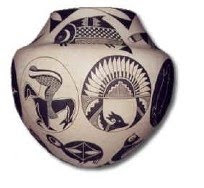
Our next project will be a coil project based on the pottery of Maria Martinez and her son. Maria was a native american potter living in New Mexico and making coil pots for a living. Though she is no longer living, her pottery is world-renowned now, and we can learn a lot from her talent!

*Please watch this video if you will not be in class the first week back in January, as we will be watching it when we get back:

http://www.youtube.com/watch?v=S95t9Z9ev44

Monday, December 12, 2011

LUMINARY MID-POINT SELF-ASSESSMENT

Please answer the following questions in your journals and pass them in by Friday, Dec. 16th

1. What steps have you completed for your luminary project so far?

2. How is your project turning out compared to your sketches? Has anything changed, and how are you dealing with these changes?

3. Which underglazes/overglazes are you thinking about using on your project? What interesting glazing or painting techniques do you plan to try on this project?

Monday, November 28, 2011

Luminary Project Sketches

In preparation for your Luminary Project, you will be doing sketches in your notebook or on the blank page provided in your assignment packet. Please be sure to include all of the following aspects in your sketches in order to receive full credit for the assignment!

1. Write 2-3 sentences describing your dream. Include why you have chosen to represent this dream, and how you will show the viewer what your dream is.

2. Draw your luminary box and color it in! Include details like where you will cut out shapes.

3. Draw each side that you will need to cut out and write the measurements of each. This will make it easier to create a paper template in class.

This assignment is due Friday December 1st, or early for extra credit!

Wednesday, November 2, 2011

CLASS DISCUSSION: COMPLETED PROJECT
HOMEWORK DUE FRIDAY NOV. 4th

Please answer the following questions (neatly handwritten or typed) in preparation for our group discussion in class on Friday. Be prepared to show your project to the class and give a brief description of your process.

1. Describe the project you have chosen to show to the group: what assignment it was, what forming techniques you used (ex. slabs, slipping and scoring, wheel) what glazes you used etc.

2. What was the most difficult part of making your project? How did you fix this problem?

3. What ceramics techniques did you learn while making this project that you think you will use again?


Tuesday, October 11, 2011

Cup and Saucer Assignment Due Friday, October 14th

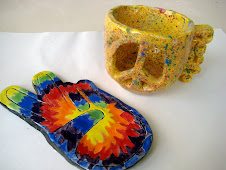
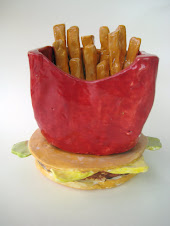
Your next project in class will be to create a cup and saucer based on a word of your choosing. This word will help you determine the colors, shapes and overall mood of your project. See the examples to the right of past students' projects!

*Your homework assignment is to choose three words that you might want to use for your cup and saucer project. *

Choose from the list below, or choose your own! Write down your three words in your sketchbook, leaving space for your sketches.

In class, we will draw out ideas for how each word could be turned into a sculpture that you might be able to use for your pinch pot project.

(If you want to start your sketches at home, you will get extra credit!!)

Remember that there is a cup and a saucer--how could you relate the two together? Think about whether you want your cup and saucer to be functional or sculptural.

acidic wiggly aggressive joyous silent tinystormy tired fluffy curly loud lovely slimyunruly precious dazzling elegant cloudy deliciousmysterious grumpy lucky puzzling enchantedancient valuable heavenly graceful dreary alivecrooked lacy rotten strange spiky poisedovergrown sleepy friendly

Monday, September 26, 2011

Since we are currently working towards making projects on the wheel, I would like each of you to find
an image of a bowl or mug
online, in a book or magazine and bring it in to class by Friday Sept. 30th
(if you bring it in early you will get extra credit!)
Choose a picture that inspires you and gives you ideas in terms of surface design or decoration

Thursday, September 8, 2011

Tremendous Texture Tiles!

For this project, you will create tiles with an image drawn, carved, pressed and/or painted onto the surface. You will need to bring in at least 3 items to press into the clay to create textures (think leaves, sticks, lace, buttons, old jewelry, etc.) Your central image will be a narrative (based on a story, true or fictional). Choose from literature, or create your own story (but you have to write it down!) You have two options for what type of tiles to create:

Single Tile: One tile, approximately 6”x6”, square or irregular outside shape.

Must include: at least 3 textures, at least one area of 3D sculpting, even background tile thickness

Multiple Tiles: Three or Four tiles, connected through a central image. Each tile is approximately 4”x4”.

Must include: at least 3 textures, at least one area of 3D sculpting , even background tile thickness

Your projects will be graded on the following:

Craftsmanship: Neatness, careful control drying (no warped tiles), glazing

Creativity: Well-planned ideas based on a story, careful application of textures

Community: How you relate to your peers, cleanup habits, attendance

Tuesday, September 6, 2011

Mrs Patterson * Beginning Ceramics

Clay is an ancient medium that began as a means to create functional objects used in everyday life, and has evolved to become one of the most beautiful forms of artistic expression. In this class, you will have the opportunity to explore your creativity through the form and function of ceramics. I encourage you to take risks and develop your personal style throughout the semester. In this class, we will study the beginning techniques of pinching, coiling and slab building. We will also practice beginning skills on the wheel. In addition to the class work, you will have weekly assignments reinforcing the techniques we are studying.

For this class you will need: a shoebox to store clay and projects in (I have some used ones, or you can get your own) a notebook to record outside assignments and sketch project ideas (lined, blank, leftover from Foundations…) three plastic bags to wrap clay in--small trash bags and gallon-sized Ziploc bags work wellsoap, hand lotion or tissues to contribute to the classroom

Grading Your projects will be graded by the execution of the technique studied, the glaze or finish, and your written feedback on the grading sheet. You are responsible for any assignments written on the board, so check it daily! Your overall grade will be a combination of your projects, outside assignments, and effort.
Cleanup Keeping this room clean is a matter of safety. Each artist is responsible for their own workspace as well as a weekly studio job, which will help with the general maintenance of the studio space. Completion of your cleanup jobs will factor into your effort grade.

Expectations

*You will show up on time and remain in class until the bell rings. If you need to leave, tell me. Lining up at the door before the bell shows me that you have extra time to do more cleaning!
*You will work on projects throughout the class, and clean up well every day. Your effort grade is heavily based upon everyday work habits, so make them good. No non-enrolled students are allowed in the room during class time.
*No food or drink in the room. It is unhealthy to eat in this room due to the nature of the materials we use, and this also avoids messes in the workspace.
*No Ipods or cell phones during class. This is a school rule as well as my own rule—these devices are distracting and antisocial, making it difficult for me to teach and for you to learn.
*Respect the kilns! They are almost always running, and they get very hot. Please be careful when bringing work into the kiln room
*Respect each other. Remember the Golden Rule? Your language and attitude create the atmosphere in our classroom, and make it a comfortable place to be. If you can speak in a respectful way and manage your time well while you are in this class, you will do well this semester!

Monday, May 9, 2011

Artist Study * Mini-Research Paper

For this paper, you will find a ceramic artist whose work you are particularly drawn to…look online, in books or magazines for inspiration. The artist can be contemporary, meaning they are alive and creating ceramic art today, or they can be from any point in history.

Print out or photocopy at least two images of your chosen artist’s work. These photos will be passed in with your paper.

The paper will be a summary of the artist’s bio as well as why you chose them and what specifically you admire about their work. This should be about 1 page: make sure you include all the information below!

-who the artist is

-important dates: birth, death (if applicable), when they were creating artwork

-where they are from, where they work(ed)

-what specific techniques do they use? types of clay/glazes, type of kiln/firing process

*hint: when you see a word you do not recognize, ex. “raku”, look it up in Google or Wikipedia and describe that in your paper!

-why you chose this artist: what drew you to their work? why do you admire this person, what about your knowledge of ceramics makes them particularly interesting?

-what connections can you make between this person’s work and your own ceramic work? are the two similar in style, concept, form or finish?or are they very different—and how did the similarities/differences influence your decision to choose this artist in particular?

Please use complete sentences, and type the paper….remember that the content is more important than the length of the paper!

*Due Friday, May 2oth*

10 extra points if passed in by May 13th

5 extra points if passed in by the 19th

Monday, April 25, 2011

WRITTEN REFLECTION: GLAZES
DUE THURSDAY APRIL 28th FOR ALL BLOCKS

Choose one of your pieces that have been glazed to reflect on for this homework assignment. Answer the following questions in your notebooks in full sentences:

Which glazed piece did you choose to reflect on? What specifically did you do with painting to enhance the surface of your project?

What mistakes, mishaps or misunderstandings have you had throughout the glazing process, and how has this helped you to become better at glazing?

What colors or techniques do you want to try on future projects that you have not experimented with yet?

Monday, March 7, 2011

Slab Dish Designs
Homework due Wednesday March 9th for A and D blocks

Your next project will be a slab dish like the one pictured to the right...it will be a flat slab rolled out, cut into a shape of your choosing, and bent slightly upwards, then a foot is added to the bottom.

To prepare for this assignment, you will find one design or pattern, and one image that you want to use on your slab dish. You will be combining the pattern with the image you find, so make sure you like both! See examples to the right.

Print out the image and pattern, or tear from a magazine, or bring in a book that you find them in. We will be using tracing paper to transfer them onto your plate next week.